
Best AWS Architecture Diagram Makers: 2026 Comparison
If you're a cloud engineer, you know the drill. You spend 20 minutes placing boxes in draw.io, another 15 aligning arrows, and by the time you share the diagram, someone has already changed the infrastructure. The diagram that took you an hour to create is outdated before you hit "save."
AWS architecture diagrams are foundational to planning, governance, and team alignment. They accelerate onboarding, improve incident response, and enable architecture reviews. But the value of a diagram depends entirely on its accuracy. A diagram that's outdated by even a few weeks can become misleading, or worse, dangerous.
This guide compares the leading AWS architecture diagram makers available in 2026, manual tools, AI-powered generators, live infrastructure scanners, and code-based automation, so you can choose the one that actually fits your workflow.
Cloud Architecture
Create cloud architecture diagrams for AWS, Azure, GCP, and more. Design scalable infrastructure with professional cloud icons.
Compare the best AWS architecture diagram makers in 2026, AI Line Studio, Draw.io, Lucidchart, Cloudcraft, Terravision, and more.
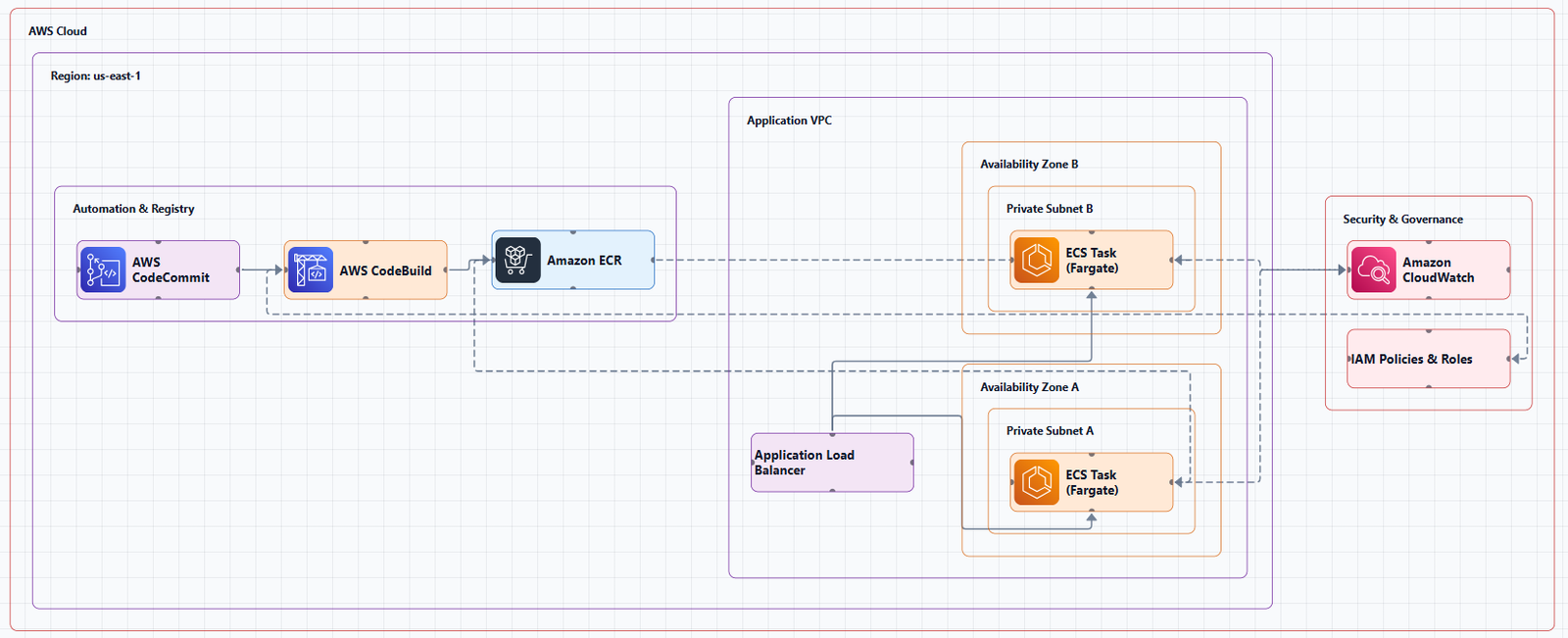
Click Cloud Architecture to open AI Line Studio and generate diagrams from natural language in seconds.
Quick Comparison: Best AWS Architecture Diagram Makers
| Tool | Input Method | AWS Support | Key Differentiator | Starting Price |
|---|---|---|---|---|
| AI Line Studio | Natural language prompt | Full (AWS, Azure, GCP, OCI) | Animated diagrams from text in 15 to 20 seconds | Free tier |
| Draw.io (diagrams.net) | Manual drag-and-drop | Full AWS icon library | Completely free, massive icon library, works offline | Free |
| Lucidchart | Manual + AI assist | Full AWS, Azure, GCP | Real-time collaboration + AWS Simple Icon library | $7.95+/mo |
| Visual Paradigm AI | Natural language + guided discovery | AWS, Azure, GCP, Alibaba, IBM, Oracle, Huawei | Well-Architected alignment + AI-guided discovery | Enterprise pricing |
| Cloudcraft | Live AWS scan + manual | AWS only | 3D isometric views + cost estimation | $49+/mo |
| Holori | Live AWS scan + manual | AWS, Azure, GCP | Daily sync + diff detection + cost dashboard | Paid |
| Terravision | Terraform code | AWS (200+ services), GCP, Azure | CI/CD-ready automation from IaC | Free (open source) |
| AWS Workload Discovery | Live AWS scan | AWS only | First-party AWS tool, self-hosted | Free |
| AWS Playboard | Drag-and-drop + AI | AWS | 100+ AWS icons, animated connections, AI generation | Free |
| Figma | Drag-and-drop | AWS (community library) | Free design tool used by top design teams | Free |
| Lunacy | Drag-and-drop | AWS icons | Completely free for commercial use | Free |
Tool-by-Tool Breakdown
Draw.io (diagrams.net), The Free Workhorse
Draw.io is the most popular free option, and for good reason. It has built-in AWS icon libraries, works in the browser, exports to PNG/SVG/PDF, and integrates with Confluence, Google Drive, OneDrive, and Dropbox.
- In the left panel, click More Shapes at the bottom
- Scroll to the Networking section
- Select the AWS library you want, then click Apply
Getting started with AWS shapes:
Using AWS templates:
- Click Arrange > Insert > Template
- Expand the Cloud category, then select AWS
- Click Insert to add the template
Draw.io also includes Amazon's 3D or isometric shapes. Hover over a shape to see a tooltip that tells you what it represents in AWS notation.
The real cost isn't money, it's maintenance. The moment your infrastructure changes, your diagram is out of date. Someone has to manually update it, and that someone is usually nobody.
Best for: Solo developers, small teams, students, and anyone who needs a free, flexible diagramming tool.
Limitations: No automation. You pay with your time. Diagrams require manual updates.
Lucidchart, Enterprise Collaboration with Official AWS Icons
Lucidchart provides a clean, efficient way to diagram AWS-dependent infrastructures. Its AWS Simple Icon library is the official set as designated by Amazon Web Services. This means any system engineer can quickly diagram and implement planned infrastructure.
Key features:
- Real-time collaboration, multiple people edit simultaneously
- AWS import, save time by importing your AWS architecture directly
- Better auto-layout and alignment tools than Draw.io
The problem is the same as Draw.io, it's still manual. You're paying $8-15/month per user for a tool that produces diagrams that go stale immediately.
Best for: Teams that need real-time collaboration and already use Lucidchart for other purposes.
Tradeoff: Still manual. Still maintenance-heavy. Costs add up.
Visual Paradigm AI, Enterprise-Grade AI Diagram Generation
Visual Paradigm's AI Cloud Architecture Studio is a browser-based tool specifically tailored for modern cloud architects. As a leading AI diagram generator, it allows you to describe your requirements in plain English and receive a standards-compliant AWS diagram in minutes.
How it works:
- Describe your system: Input a prompt like "I want to build a real-time food delivery app with live order tracking, payments, and ratings"
- Select your provider: Choose AWS and select a deployment strategy, Low Cost/MVP or High Availability
- Technical deep dive: The AI asks clarifying questions to refine the stack (e.g., choosing between Relational or NoSQL databases)
- Generate architecture: Click Generate Cloud Architecture. The AI instantly builds a clean, interactive diagram using official AWS icons
- AI-powered modification: Use the AI Modify tool. Type "Add WAF and CloudWatch monitoring," and the diagram updates automatically
Key benefits:
- Natural language input, no manual dragging required
- Well-Architected Alignment, AI strategies ensure your design prioritizes cost-efficiency or uptime
- Interactive editor, full control to move components or add custom metadata
- Export & share, high-res SVGs for presentations or technical documentation
Best for: Enterprise teams that need a comprehensive modeling ecosystem (UML, SysML, ArchiMate, BPMN, C4) alongside cloud architecture diagrams.
Tradeoff: More complex and expensive than purpose-built cloud diagramming tools.
AI Line Studio, Natural Language to Animated Diagrams
AI Line Studio takes a fundamentally different approach from traditional diagramming tools. Instead of a drag-and-drop canvas, the primary input is natural language. Describe a system, "a 3-tier web app on AWS with EC2, RDS, and CloudFront", and it generates a structured diagram with official AWS icons in 15 to 20 seconds.
The output isn't just static. AI Line Studio supports animated diagrams (GIF, MP4) alongside standard PNG exports, plus shareable documentation links. This makes it genuinely useful for demos, training materials, and investor presentations. For AWS-specific workflows, the dedicated AI cloud diagram generator turns AWS descriptions into production-ready visuals. If you're working across multiple providers, the AI architecture diagram builder covers AWS, Azure, GCP, and OCI with over 3,000 officially licensed icons.
Best for: Engineers who value speed and want to generate diagrams from descriptions rather than spending time on manual placement. Also ideal for teams creating presentation-ready, animated architecture visuals.
Tradeoff: Less control over fine-grained layout compared to manual tools. Not suitable for non-technical diagram types.
Cloudcraft, Live Scanning with 3D Isometric Views
Cloudcraft (now owned by Datadog) scans your AWS account and generates both 2D and 3D architecture diagrams. The 3D isometric view looks impressive in presentations. It also includes cost estimation, hover over any resource to see its monthly cost.
Key features:
- Live diagram generation, reverse-engineers the architecture in your cloud account
- EKS Cluster visualization, scan Amazon EKS clusters to visualize deployed workloads and pods
- Smart components for Amazon EC2, ELB, Lambda, RDS, DynamoDB, Kinesis, Redshift, CloudFront
- Export to .drawio format, open and edit in draw.io
The catch: you need to give it read access to your cloud account. For many organizations, this is a non-starter, security teams don't want a third-party service scanning production infrastructure. It's also expensive at $49/month for individual use.
Best for: Teams that regularly present architecture to executives, clients, or investors where visual quality and cost insights matter.
Tradeoff: Premium pricing. Security concerns with third-party access. AWS-only.
Holori, Automated Discovery with Diff Detection
Holori excels at providing high-level visibility for complex cloud environments. Its primary strength is the automated generation of AWS diagrams directly from cloud accounts, eliminating the need for manual drawing.
Key features:
- Daily sync, ensures diagrams reflect the real-time state of your infrastructure
- Diff diagrams, merges two versions in a single diagram highlighting added, modified, or deleted resources
- Cost management dashboard, see resource configurations alongside costs and usage
- Flexible editor, vast library of multi-cloud icons (AWS, Azure, GCP, and more) for hybrid designs
Best for: Large organizations with complex, multi-account AWS environments that need automated, always-up-to-date diagrams.
Tradeoff: Paid. More complex setup than browser-based tools.
Terravision, Diagrams from Terraform Code
Terravision automatically converts your Terraform code into professional-grade cloud architecture diagrams using the official AWS, GCP, and Azure icon sets.
Key features:
- Always up-to-date, diagrams generated directly from your Terraform code
- 100% client-side, no cloud access required; your code never leaves your machine
- CI/CD ready, automate diagram updates on every PR merge
- Free & open source, no expensive diagramming tool licenses
- Multi-cloud, AWS (full support, 200+ services), GCP, and Azure (core services)
- Interactive HTML output, clickable nodes, pan/zoom, search, animated data flow
- Editable draw.io export, open in draw.io, Lucidchart, or any mxGraph editor
- Optional AI annotations, labels, titles, and flow sequences from Ollama (local) or AWS Bedrock
Quick start:
pipx install terravision
terravision draw --source ./path-to-your-terraform --show
Best for: Teams using Terraform who want automated, always-accurate diagrams without manual maintenance.
Tradeoff: Requires Terraform and Python setup. Azure and GCP support is partial (core services only).
AWS Workload Discovery, First-Party AWS Tool
Amazon's own solution, deployed as a CloudFormation stack in your account. It scans your resources and generates interactive diagrams. Being first-party, it avoids security concerns about third-party services scanning your infrastructure.
Best for: Teams that need accurate, up-to-date diagrams of their live AWS infrastructure and want to keep data within their AWS account.
Tradeoff: Requires deploying a CloudFormation stack (about 30 minutes setup). AWS-only.
AWS Playboard, Interactive Drag-and-Drop with AI
AWS Playboard is a free online tool that lets you design, visualize, and share AWS architecture diagrams with an interactive drag-and-drop builder. Includes 100+ AWS service icons, animated connections, AI-powered generation, and one-click export.
The origin story: "I built this because every time I learned or taught AWS, I hit the same problem: the tutorials are powerful, but they're abstract and hard to visualize. You end up memorizing services instead of actually understanding how things connect."
Best for: Learners and engineers who want a visual, interactive way to understand AWS service relationships.
Tradeoff: Newer tool with a smaller user base. Still early-stage development.
Figma, Professional Design Tool with AWS Templates
Figma is a free design tool used by top design teams like Uber, Square, and GitHub. It offers an AWS diagram library for creating architecture diagrams.
Key features:
- Drag-and-drop shapes, arrows, UML symbols, and AWS components
- Real-time collaboration, share a link and collaborate with anyone
- No installation, lives in the browser
- Community templates, explore 1,000+ templates built by the Figma community
Best for: Teams already using Figma for design work who want to create AWS architecture diagrams in the same tool.
Tradeoff: AWS diagramming is not Figma's primary purpose. You'll need to find and use community-built AWS libraries.
Lunacy, Free Vector Editor for Polished Diagrams
Lunacy is a powerful, completely free vector editor with cloud architecture icon support. Unlike costly visualization software, Lunacy comes completely free even in commercial or enterprise settings without feature restrictions.
Best for: Creating polished, presentation-ready diagrams with full control over aesthetics.
Tradeoff: Not specialized for cloud architecture. No automation.
AI-Powered AWS Diagram Generation: The New Frontier
AI-powered tools are fundamentally changing the workflow. Instead of dragging boxes, you describe your architecture in natural language, and the tool generates a professional diagram in seconds.
AWS Diagram MCP Server
The draw.io MCP server, developed by AWS Samples, enables AI assistants to build technical diagrams on your local computer through natural language.
Key features:
- Privacy First, all operations run entirely on your local machine. No diagram data is transmitted over the network.
- Natural language diagram creation through AI assistants
- Works with AWS, Kubernetes, and more icons
- 100% local operation with no network dependencies
Quick example:
You: "Create an AWS serverless architecture diagram with CloudFront, API Gateway, container-based Lambda (pulling from ECR), connecting to Aurora PostgreSQL, OpenSearch, S3, and Bedrock. Include Cognito for authentication, IAM roles, and CodePipeline for deployment. Show the VPC and private subnet structure."
AI: Generates a properly formatted draw.io diagram with official AWS icons.
Best for: Teams using AI assistants (Claude Desktop, Claude Code, Kiro) who want to generate AWS diagrams locally with full privacy.
Tradeoff: Requires MCP client configuration. Pre-release alpha software.
AWS Architecture Diagram Skill
A reusable skill for generating AWS architecture diagrams in draw.io format. Works with any AI assistant, ChatGPT, Claude Projects, Kiro CLI, or any internal AI agent that supports custom prompts and file uploads.
Key features:
- Left-to-right flow, UI/Frontend on left, data sources on right
- Official AWS icons, from draw.io's built-in
mxgraph.aws4namespace - Verified icon catalog, only icons confirmed to render correctly
- Consistent styling, proper AWS color palette
Installation: npx skills add vidanov/aws-architecture-diagram-skill
Best for: Teams already using AI assistants who want to add AWS diagram generation capabilities.
AWS Architecture Diagram Best Practices
The goal of any AWS architecture diagram is to clearly communicate structure and intent.
1. Keep Diagrams Simple and Readable
Focus on the components and relationships that matter for the intended audience. Avoid overcrowding the diagram with unnecessary detail.
2. Use Official AWS Icons
AWS architecture icons are designed to be simple. Consistent use of official AWS icons makes diagrams easier to read. Always check that you're using up-to-date icons, as some third-party libraries may contain legacy icon sets.
3. Use Directional Arrows
Show the flow of data. Lines without arrows are ambiguous.
4. Emphasize Network Boundaries
Clearly show VPCs, subnets, and security groups. Show security groups and network ACLs.
5. Include the Main Components
A strong AWS architecture diagram should include the main services, network boundaries, user entry points, and the core data or request flow.
6. Follow Layout Guidelines
- 180px horizontal / 120px vertical gaps between service group containers
- Group padding: 30px all sides
- For diagrams with 13+ services: increase spacing to 220px horizontal, 160px vertical
7. Label Everything
Provide clear, accurate labels for each icon. Don't assume readers will recognize an icon.
8. Include Metadata
Add a title, description, last updated date, author, and version. A diagram without a date is assumed to be outdated.
Common Mistakes to Avoid
Mistake 1: Outdated diagrams. The biggest problem with any tool is maintenance. Set a reminder to update diagrams when infrastructure changes. Better yet, use an automated or AI tool that lets you regenerate in seconds.
Mistake 2: Using the wrong icons. Always use official AWS icons. Draw.io provides them built-in. AI tools like AI Line Studio use real AWS icons automatically.
Mistake 3: No labels. Every icon should have a clear label. Don't assume readers will recognize an icon.
Mistake 4: No directional arrows. Lines without arrows are ambiguous. Always show the flow of data.
Mistake 5: Overloading one diagram. If your diagram has more than 15 to 20 nodes, it's too complex. Split it into multiple diagrams.
Decision Framework: How to Choose
| If you need... | Choose... |
|---|---|
| A free, reliable manual tool | Draw.io |
| Enterprise collaboration | Lucidchart |
| A diagram in seconds from text | AI Line Studio or Visual Paradigm AI |
| Animated diagrams for presentations | AI Line Studio |
| Live infrastructure accuracy | Cloudcraft, Holori, or AWS Workload Discovery |
| Terraform-based automation | Terravision |
| Privacy-first AI generation | AWS Diagram MCP Server |
| A free, visual learning tool | AWS Playboard |
| A tool your design team already uses | Figma |
Summary
AWS architecture diagram makers have come a long way. You no longer need to choose between expensive enterprise software and clunky free options. The best tools in 2026 offer AI-powered generation, live infrastructure scanning, or real-time collaboration, often with generous free tiers.
Key takeaways:
- If you need a free, reliable manual tool, Draw.io remains the people's champion. Try the AWS architecture diagram maker for templates and practical examples.
- If you value speed and natural language input, AI Line Studio is the fastest path from description to diagram. Try the AI cloud diagram generator to see how quickly you can turn an AWS description into a visual.
- If you need enterprise-grade AI and modeling, Visual Paradigm AI delivers a full ecosystem. The AI architecture diagram builder helps you build and refine AWS architecture diagrams into production-ready designs.
- If you need live infrastructure accuracy, Cloudcraft, Holori, or AWS Workload Discovery eliminate manual maintenance.
- If you use Terraform, Terravision keeps diagrams in sync with your infrastructure automatically.
- If you need complete system architecture beyond AWS, the AI system architecture generator covers distributed and enterprise systems.
Stop spending hours on diagrams that will be outdated next week. Start documenting your AWS architectures in a way that actually keeps pace with your infrastructure.