
Best Azure Architecture Diagram Generators: 2026 Comparison
If you've ever spent hours hunting for the right Azure icon or aligning connection points for a complex architecture diagram, you know the bottleneck it creates. Manual diagramming is time-consuming, error-prone, and produces static artifacts that go stale the moment your infrastructure changes.
Azure architecture diagram generators have evolved dramatically. The best tools in 2026 don't just help you draw, they help you generate diagrams from natural language, infrastructure-as-code, or live cloud environments. The workflow shift is real: what used to take hours can now take seconds.
This guide compares the leading Azure architecture diagram generators available in 2026, AI-powered prompt-based tools, code-based automation, live infrastructure scanners, and traditional options, so you can choose the one that actually fits your workflow.
Cloud Architecture
Create cloud architecture diagrams for AWS, Azure, GCP, and more. Design scalable infrastructure with professional cloud icons.
2026 comparison of the best Azure architecture diagram generators, AI prompt tools, Terraform automation, live scanners, and how to choose the right one.
Click Cloud Architecture to open AI Line Studio and generate diagrams from natural language in seconds.
Quick Comparison: Best Azure Architecture Diagram Generators
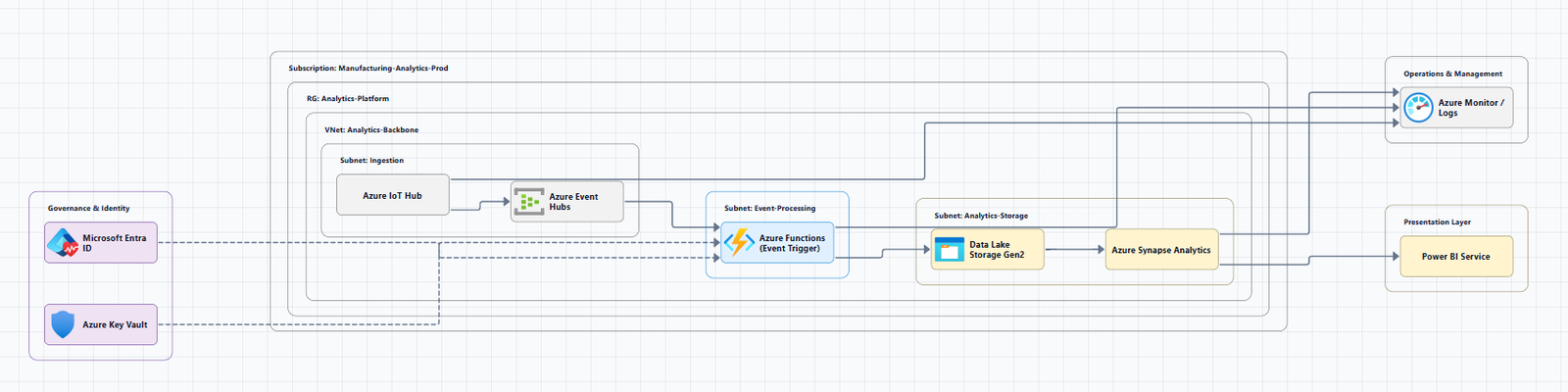
| Tool | Input Method | Output Format | Key Differentiator | Setup Required | Pricing |
|---|---|---|---|---|---|
| AI Line Studio | Natural language prompt | PNG, GIF, MP4, shareable links | Animated diagrams from text in 15 to 20 seconds | None (web-based) | Free tier available |
| Visual Paradigm AI | Natural language + guided discovery | SVG, PDF, Markdown | Azure Well-Architected alignment + AI-guided discovery | None (web-based) | Enterprise pricing |
| Azure-DrawIO-MCP | Natural language (via AI assistant) | Draw.io (.drawio) | Editable output with official Azure icons | Python 3.10+, VS Code | Free (open source) |
| diagram-ai-generator (MCP) | Natural language (via Claude Desktop) | PNG, SVG | Multi-cloud (Azure, AWS, GCP, K8s) + smart suggestions | Python + MCP config | Free (open source) |
| SketchMyInfra | Natural language prompt | SVG, PNG, PlantUML | Exports editable, version-controllable PlantUML | None (web-based) | Free |
| TerraVision | Terraform code | PNG, HTML, draw.io XML | CI/CD-ready automation from IaC | Python 3.10+, Graphviz | Free (open source) |
| Azure Terraform Diagram | Terraform code | PNG, interactive webview | VS Code extension with security & cost insights | VS Code extension | Free |
| Azure Cloud AI Visualizer | Natural language + visual design | Diagrams + Bicep/Terraform | Generates IaC from diagrams | None (web-based) | Free (open source) |
| CloudNetDraw | Live Azure scan | Network diagrams (HLD, MLD) | Generates network diagrams from live environment | Azure credentials | Free |
AI-Powered Azure Architecture Diagram Generators
AI Line Studio, Natural Language to Animated Diagrams
AI Line Studio takes a fundamentally different approach from traditional diagramming tools. Instead of a drag-and-drop canvas, the primary input is natural language. You describe a system, "a web app on Azure with App Service, Azure SQL Database, and Azure Front Door", and the tool generates a structured diagram with official Azure icons in 15 to 20 seconds.
The output supports animated diagrams (GIF, MP4) alongside standard PNG exports, plus shareable documentation links. For Azure-specific workflows, the dedicated AI cloud diagram generator turns Azure descriptions into production-ready visuals. If you're working across multiple providers, the AI architecture diagram builder supports Azure, AWS, GCP, and OCI.
Best for: Engineers who value speed and want to generate diagrams from descriptions rather than manual placement. Also ideal for teams creating presentation-ready, animated architecture visuals.
Tradeoff: Less control over fine-grained layout compared to manual tools. Not suitable for non-technical diagram types.
Visual Paradigm AI, Azure Well-Architected Alignment
Visual Paradigm's AI Cloud Architecture Studio is a browser-based, AI-first platform built specifically for modern cloud professionals. It serves as an AI-powered Azure design tool that aligns your infrastructure with the Azure Well-Architected Framework and enterprise best practices.
How it works:
- Describe your infrastructure: Input a prompt like "I want to build a real-time food delivery app on Azure with AKS, managed SQL Database, and a Redis cache, protected by an Application Gateway"
- Select your strategy: Choose an architecture goal such as High Availability, Enterprise Grade, or Low Cost/MVP to guide the AI's resource placement
- Technical deep dive: The AI engages in a discovery process, asking clarifying questions like "Should the database use geo-redundancy across different Azure regions for disaster recovery?"
- Automated generation: The AI renders a professional diagram featuring official Azure service icons and logical networking connections
- Interactive AI modification: Type "Add a Web Application Firewall (WAF) to the front end and link the database to a private endpoint," and the diagram updates in real-time
Key benefits:
- Service awareness: Understands AKS, SQL, and VNet relationship logic, not generic boxes
- Infrastructure strategy: Applies automated high-availability and cost-efficiency patterns
- Professional SVG exports: Download high-quality vectors for architecture decision records (ADRs), stakeholder presentations, or technical documentation
- Multi-cloud ready: Use the same AI diagram generator to compare Azure setups to similar stacks on AWS or GCP
Best for: Enterprise teams that need Azure Well-Architected alignment and comprehensive modeling capabilities.
Tradeoff: More complex and expensive than purpose-built cloud diagramming tools. Part of a broader enterprise ecosystem.
Azure-DrawIO-MCP, Editable Diagrams via AI Assistant
The Azure-DrawIO-MCP server generates editable Azure architecture diagrams in Draw.io format using an MCP (Model Context Protocol) server. Think of it as a plugin for AI assistants like GitHub Copilot or Claude, you simply ask "draw me an Azure architecture diagram" and it generates one for you.
What it does:
- Generates Azure architecture diagrams as
.drawiofiles - Uses official Azure icons from Draw.io's Azure2 SVG library
- Supports 100+ Azure resource types (VMs, App Services, AKS, SQL, etc.)
- Auto-layouts resources left-to-right (data sources on left, destinations on right)
- Groups resources into visual clusters (resource groups, VNets, subnets)
Why Draw.io over PNG:
| Feature | PNG (Original) | Draw.io (This Project) |
|---|---|---|
| Editable | ❌ Not editable | ✅ Fully editable |
| Version Control | ⚠️ Binary diffs | ✅ XML text diffs |
| Export Options | PNG only | ✅ PNG, SVG, PDF |
| Adjust Layout | ❌ Regenerate | ✅ Drag and drop |
Unlike PNG generators, the diagram is just a starting point, customize it however you like: drag icons to reposition, resize groups, add labels, copy/paste icons, and export to PNG, SVG, or PDF.
Best for: Teams using AI assistants (GitHub Copilot, Claude) who want editable, version-controllable Azure diagrams.
Tradeoff: Requires Python 3.10+ and VS Code with the Draw.io extension.
diagram-ai-generator, Multi-Cloud MCP Server
diagram-ai-generator is a professional AI-powered architecture diagram generator with multi-cloud support and MCP server integration. Generate beautiful, accurate diagrams with provider-specific icons for Azure, AWS, GCP, Kubernetes, and more.
Key features:
- Professional Diagrams: Generate diagrams with real provider icons (Azure Functions, etc.)
- Multi-Cloud Support: Mix Azure, AWS, GCP, and other providers in a single diagram
- Smart Node Suggestions: Automatic suggestions when component names don't match exactly
- MCP Server Integration: Works seamlessly with Claude Desktop and other MCP clients
- Docker Ready: One-command deployment with Docker Compose
Quick example:
Prompt: "Create a microservices architecture with load balancer, containers, and Redis cache"
The AI understands your requirements and generates production-ready diagrams with the correct cloud provider icons and relationships
Best for: Teams using Claude Desktop who need multi-cloud diagram generation.
Tradeoff: Requires Python and MCP client configuration.
SketchMyInfra, Free AI Tool with PlantUML Export
SketchMyInfra is a free AI tool that converts natural language descriptions into production-quality infrastructure diagrams using PlantUML. No signup required.
Key differentiators:
- AI generation from text, describe in plain English, get a diagram in under 5 seconds
- Official cloud icons for AWS, GCP, and Azure
- Exports editable PlantUML code, version-controllable, portable
- Context-aware iteration, refine your prompt and the AI uses your previous diagram as context
- Completely free, no account needed
Unlike Eraser or Lucidchart, SketchMyInfra gives you PlantUML code, not just an image. That means you can check the diagram into Git alongside your infrastructure code, tweak the code manually, and integrate it into your docs pipeline (Confluence, Notion, GitHub wikis all support PlantUML).
Best for: Engineers who want a quick, free, no-commitment way to generate diagrams from text and need PlantUML export for version control.
Tradeoff: No native visual editing. PlantUML output requires familiarity with the format for manual tweaks.
Infrastructure-as-Code Diagram Generators
TerraVision, Diagrams from Terraform Code
TerraVision automatically converts your Terraform code into professional-grade cloud architecture diagrams using the official AWS, GCP, and Azure icon sets. Your diagrams stay in sync with your infrastructure.
Key features:
- Always up-to-date: Diagrams generated directly from your Terraform code
- 100% client-side: No cloud access required; runs locally, your code never leaves your machine
- CI/CD ready: Automate diagram updates on every PR merge
- Free & open source: No expensive diagramming tool licenses
- Multi-cloud: AWS (full), GCP, and Azure (core services)
- Interactive HTML output: Clickable nodes, pan/zoom, search, animated data flow
- Editable draw.io export: Open in draw.io, Lucidchart, or any mxGraph editor
- Optional AI annotations: Labels, titles, and flow sequences from Ollama (local) or AWS Bedrock
Quick start:
pipx install terravision
terravision draw --source ./path-to-your-terraform --show
That's it, your diagram is saved as architecture.png and opens automatically.
Azure example:
terravision draw --source tests/fixtures/azure_terraform/test_vm_vmss --showBest for: Teams using Terraform who want automated, always-accurate diagrams without manual maintenance.
Tradeoff: Requires Terraform and Python setup. Azure support is currently partial (core services only).
Azure Terraform Diagram, VS Code Extension
Azure Terraform Diagram is a VS Code extension that generates beautiful Microsoft Azure-style infrastructure diagrams from your Terraform projects automatically, with comprehensive DevOps insights including security analysis, cost estimation, and infrastructure metadata.
Key features:
- Auto-generate diagrams on save, automatically creates
architecture.pngwhen you save any.tffile - Resource Group Grouping, resources are visually grouped inside their resource groups
- Multi-project Support, each Terraform project folder gets its own separate diagram
- Interactive webview, explore your infrastructure with pan, zoom, and click-to-navigate
- Azure-style visuals, uses official Microsoft Azure icons and color schemes
- Security Badges, visual indicators for security issues (missing encryption, public endpoints, weak TLS)
- Cost Estimation, monthly cost estimates displayed on resources
Usage: Right-click on any folder in the VS Code Explorer and select "Generate Azure Infrastructure Diagram" to generate a diagram for just that folder's Terraform resources.
Best for: Engineers already working in VS Code who want automated Terraform diagrams with security and cost insights.
Tradeoff: VS Code-only. Requires Terraform projects to be in your workspace.
Live Infrastructure Scanners
CloudNetDraw, Network Diagrams from Live Azure
CloudNetDraw is a free tool that generates Azure network diagrams (HLD and MLD) directly from your environment. It supports both user login and service principals, or you can self-host it.
Best for: Teams that need accurate, up-to-date network topology diagrams from their live Azure environment.
Tradeoff: Focused specifically on network diagrams, not full architecture diagrams.
Decision Framework: How to Choose
| If you need... | Choose... |
|---|---|
| A diagram in seconds with no setup | AI Line Studio |
| Animated diagrams for presentations | AI Line Studio |
| Azure Well-Architected alignment | Visual Paradigm AI |
| Editable Draw.io diagrams with official Azure icons | Azure-DrawIO-MCP |
| Multi-cloud support (Azure, AWS, GCP, K8s) | diagram-ai-generator |
| Version-controllable PlantUML output | SketchMyInfra |
| Automated diagrams from Terraform | TerraVision or Azure Terraform Diagram |
| Security and cost insights from Terraform | Azure Terraform Diagram |
| Network diagrams from live Azure | CloudNetDraw |
The Pragmatic Workflow
Here's what I actually use for Azure architecture diagramming:
For rapid ideation and iteration: AI Line Studio. Describe the system in 30 seconds, get a diagram in 20 seconds. The animated exports are invaluable for presentations where static diagrams fall flat.
For editable, version-controllable diagrams: Azure-DrawIO-MCP or SketchMyInfra. Export Draw.io or PlantUML format and check it into Git alongside your infrastructure code.
For diagrams that need to stay accurate with Terraform: TerraVision or Azure Terraform Diagram. Generate diagrams directly from your infrastructure code. Run it in CI/CD to keep diagrams updated on every PR merge.
For network-focused diagrams: CloudNetDraw generates network diagrams from your live Azure environment.
Common Mistakes to Avoid
Mistake 1: Outdated diagrams. The biggest problem with any tool is maintenance. Use an automated or AI tool that lets you regenerate in seconds.
Mistake 2: Using the wrong icons. Always use official Azure icons. AI tools like AI Line Studio and Azure-DrawIO-MCP use official Azure icons automatically.
Mistake 3: No labels. Every icon should have a clear label. Don't assume readers will recognize an icon.
Mistake 4: No directional arrows. Lines without arrows are ambiguous. Always show the flow of data.
Mistake 5: Overloading one diagram. If your diagram has more than 15 to 20 nodes, it's too complex.
Summary
Azure architecture diagram generators have come a long way. You no longer need to choose between expensive enterprise software and clunky free options. The best tools in 2026 offer AI-powered generation, editable outputs, IaC generation, and multi-cloud support.
Key takeaways:
- If you value speed and natural language input, AI Line Studio is the fastest path from description to diagram. Try the AI cloud diagram generator to see how quickly you can turn an Azure description into a visual.
- If you need Azure Well-Architected alignment, Visual Paradigm AI delivers enterprise-grade modeling.
- If you need editable diagrams with official Azure icons, Azure-DrawIO-MCP generates Draw.io files you can customize.
- If you need version-controllable diagrams, SketchMyInfra exports PlantUML code.
- If you use Terraform, TerraVision or Azure Terraform Diagram keep diagrams in sync with your infrastructure automatically.
- If you need multi-cloud support, diagram-ai-generator covers Azure, AWS, GCP, and K8s.
To get started creating Azure architecture diagrams, explore the Azure architecture diagram tool for templates and practical examples. For complete system architecture beyond Azure, the AI system architecture generator covers distributed and enterprise system designs.
Stop spending hours on diagrams that will be outdated next week. Start generating your Azure architectures in a way that actually keeps pace with your infrastructure.