
Best Online Azure Architecture Diagram Tools: 2026 Comparison
Creating Azure architecture diagrams online has never been easier. You're no longer forced to choose between expensive desktop software and clunky, manual tools. Today, you have a range of powerful options, from AI-powered generators that turn plain English into diagrams in seconds, to collaborative platforms that keep your documentation in sync with your live infrastructure.
This guide compares the best online platforms for creating Azure architecture diagrams in 2026, so you can choose the one that fits your workflow.
Cloud Architecture
Create cloud architecture diagrams for AWS, Azure, GCP, and more. Design scalable infrastructure with professional cloud icons.
2026 comparison of the best online Azure architecture diagram tools, AI generators, Draw.io, ARCH, Lucidscale, and how to choose.
Click Cloud Architecture to open AI Line Studio and generate diagrams from natural language in seconds.
Quick Comparison: Best Online Azure Architecture Diagram Tools
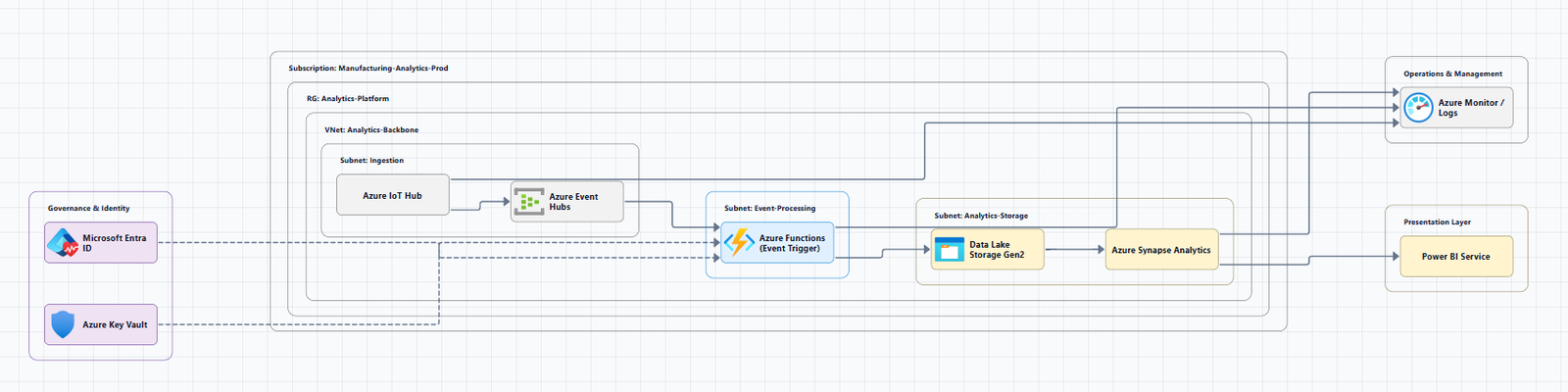
| Tool | Input Method | Key Differentiator | Signup Required | Pricing |
|---|---|---|---|---|
| AI Line Studio | Natural language prompt | Animated diagrams from text in 15 to 20 seconds | Free tier available | Free tier available |
| StackBuilder | Natural language prompt | No signup, exports to draw.io, multi-cloud | No | Free |
| Visual Paradigm AI | Natural language + guided discovery | Azure Well-Architected alignment + AI-guided discovery | Yes | Enterprise pricing |
| SketchMyInfra | Natural language prompt | Exports editable PlantUML code | No (5 diagrams/day free) | Free |
| Azure-DrawIO-MCP | Natural language (via AI assistant) | Editable Draw.io output with official Azure icons | No | Free (open source) |
| Draw.io (diagrams.net) | Manual drag-and-drop | Completely free, works offline, built-in templates | No | Free |
| ARCH App | Drag-and-drop | Local-first, privacy-focused, offline support | No | Free |
| Grafly | Drag-and-drop | No account needed, fully open source | No | Free |
| Lucidscale | Live Azure scan | Auto-generates diagrams from your cloud data | Yes | Paid |
| CloudSketcher | Natural language + image upload | Cross-cloud translation + cost estimation | No | Paid |
Tool-by-Tool Breakdown
AI Line Studio, Natural Language to Animated Diagrams
AI Line Studio takes a fundamentally different approach from traditional diagramming tools. Instead of a drag-and-drop canvas, the primary input is natural language. Describe a system, "a web app on Azure with App Service, Azure SQL Database, and Azure Front Door", and the tool generates a structured diagram with official Azure icons in 15 to 20 seconds.
The output supports animated diagrams (GIF, MP4) alongside standard PNG exports, plus shareable documentation links. For Azure-specific workflows, you can use the dedicated AI cloud diagram generator.
Best for: Engineers who value speed and want to generate diagrams from descriptions rather than manual placement. Also ideal for teams creating presentation-ready, animated architecture visuals.
Tradeoff: Less control over fine-grained layout compared to manual tools.
StackBuilder, Turn Plain English into Diagrams
StackBuilder converts a plain-English description of your system into a professional cloud architecture diagram in seconds, no dragging boxes. Type "a 3-tier web app on Azure with AKS, SQL Database, and Redis" and it draws it with the real provider icons.
Key features:
- Description → diagram, not a blank canvas, describe your infrastructure and get a professional diagram instantly
- Refine in plain English, follow up with "add a Redis cache in front of the database"
- Multi-cloud support, Azure, AWS, GCP, Kubernetes, Databricks, and multi-cloud
- Export options, PNG, SVG, PDF, or draw.io format
- No signup required, just go to stackbuilder.tech and start describing
Best for: Engineers who want to generate diagrams from descriptions rather than spending time on manual placement.
Tradeoff: Less control over fine-grained layout compared to manual tools.
Visual Paradigm AI, Azure Well-Architected Alignment
Visual Paradigm's AI Cloud Architecture Studio is a browser-based, AI-first platform built specifically for modern cloud professionals. It serves as an AI-powered Azure design tool that aligns your infrastructure with the Azure Well-Architected Framework and enterprise best practices.
How it works:
- Describe your infrastructure: Input a prompt like "I want to build a real-time food delivery app on Azure with AKS, managed SQL Database, and a Redis cache"
- Select your strategy: Choose High Availability, Low Cost/MVP, or Enterprise Grade to guide resource placement
- Technical deep dive: The AI asks clarifying questions like "Should the database use geo-redundancy across different Azure regions?"
- Automated generation: The AI renders a professional diagram featuring official Azure service icons
- Interactive AI modification: Type "Add a Web Application Firewall (WAF) to the front end and link the database to a private endpoint," and the diagram updates in real-time
Best for: Enterprise teams that need Azure Well-Architected alignment and comprehensive modeling capabilities.
Tradeoff: Part of a broader enterprise ecosystem. More complex than purpose-built cloud diagramming tools.
SketchMyInfra, Free AI with PlantUML Export
SketchMyInfra is a free AI tool that converts natural language descriptions into production-quality infrastructure diagrams using PlantUML. No signup required.
Key features:
- Plain English to diagram, describe your architecture and get a diagram in under 5 seconds
- Multi-cloud support, Azure, AWS, and GCP with official provider icons
- Editable PlantUML output, export the PlantUML source code, version-controllable, portable, and editable
- Free tier, 5 diagrams/day without an account, more with a free login
The key differentiator: SketchMyInfra gives you PlantUML code, not just an image. You can check the diagram into Git alongside your infrastructure code.
Best for: Engineers who want a quick, free way to generate diagrams from text and need PlantUML export for version control.
Tradeoff: No native visual editing. PlantUML output requires familiarity with the format for manual tweaks.
Draw.io (diagrams.net), The Free Workhorse
Draw.io is the most popular free option for Azure architecture diagrams, and for good reason. It's completely free, runs in the browser, and includes a built-in Azure shape library.
Getting started with Azure shapes in Draw.io:
- Go to the online editor
- Click More Shapes at the bottom of the left panel
- In the Networking section, click the checkbox to enable the Azure shape library
- Click Apply
Using Azure templates:
- Click Arrange > Insert > Template to open the template library
- Expand the Cloud section and select Azure to see the Azure diagram templates
Pro tips:
- Use the scratchpad for repeating sub-sections: select shapes, drag them onto the scratchpad, then click to add copies
- Use rectangles to indicate regions: Use rectangles from the General shape library, then send them to the back on the Arrange tab
- Draw connectors: Hover over any shape and drag from one of the four connection arrows to another shape
Azure icon libraries for Draw.io: A community-maintained repository provides ready-to-use Azure and Microsoft 365 architecture icons for draw.io, with one-click links that load directly into diagrams.net.
Best for: Solo developers, small teams, and anyone who needs a free, flexible diagramming tool.
Limitations: No automation. You pay with your time. Diagrams require manual updates.
ARCH App, Privacy-First, Local-First Diagramming
ARCH is a browser-based, local-first architecture designer that runs entirely in the browser with no backend required, all data stays on your device.
Key features:
- Drag-and-drop components, place cloud and network components from a multi-cloud catalog (AWS, Azure, GCP)
- Smart connection routing, orthogonal lines that automatically route around other elements
- Multi-project workspaces, organize diagrams across multiple projects
- Local-first, no backend, no account creation, no login, no server dependency
- Offline support, works without an internet connection once loaded
Best for: DevOps engineers and cloud architects working with sensitive designs who need privacy and offline capability.
Limitations: No real-time collaboration. Export options are more limited than Draw.io.
Grafly, No Account Needed
Grafly is a free browser-based diagramming tool. No account needed, everything saves locally, and you can share diagrams via smart URLs. It's fully open source.
Best for: Quick, simple Azure architecture diagrams without the overhead of account creation.
Tradeoff: Limited feature set compared to more established tools.
Lucidscale, Auto-Generate from Live Azure
Lucidscale helps you automatically create cloud architecture diagrams from your existing Azure data. You can import data from your cloud accounts and generate diagrams from different environments, including Azure. These diagrams can then be imported into Lucidchart for further refinement.
Best for: Teams that need accurate, up-to-date diagrams of their live Azure infrastructure.
Tradeoff: Paid tool. Requires Azure credentials.
CloudSketcher, AI-Powered Multi-Cloud Design
CloudSketcher is an AI-powered cloud architecture diagramming tool designed for Azure, AWS, and GCP. It supports natural language descriptions, cross-cloud translation, and image upload. No registration required.
Best for: Teams that need cross-cloud design and translation.
Tradeoff: Paid tool.
How to Choose the Right Tool
| If you need... | Choose... |
|---|---|
| A diagram in seconds from a text description | AI Line Studio or StackBuilder |
| Animated diagrams for presentations | AI Line Studio (GIF/MP4 exports) |
| Azure Well-Architected alignment | Visual Paradigm AI |
| Version-controllable PlantUML output | SketchMyInfra |
| A free, reliable manual tool | Draw.io (diagrams.net) |
| Privacy and offline capability | ARCH App |
| No account needed, quick diagrams | Grafly |
| Auto-generated diagrams from live Azure | Lucidscale |
| Cross-cloud design and translation | CloudSketcher |
The Pragmatic Workflow
Here's what I actually use for Azure architecture diagramming:
For rapid ideation and iteration: AI Line Studio or StackBuilder. Describe the system in 30 seconds, get a diagram in seconds. The speed makes it practical for exploring design options.
For editable, version-controllable diagrams: SketchMyInfra. Export PlantUML format and check it into Git alongside your infrastructure code.
For final polish: Take the AI-generated diagram and refine it in Draw.io if needed. But increasingly, the AI output is good enough to use as-is.
For diagrams that need to stay accurate with live infrastructure: Lucidscale auto-generates diagrams from your Azure environment.
Common Mistakes to Avoid
Mistake 1: Outdated diagrams. The biggest problem with any tool is maintenance. Use an AI tool that lets you regenerate in seconds.
Mistake 2: Using the wrong icons. Always use official Azure icons. AI tools like AI Line Studio and StackBuilder use official Azure icons automatically.
Mistake 3: No labels. Every icon should have a clear label. Don't assume readers will recognize an icon.
Mistake 4: No directional arrows. Lines without arrows are ambiguous. Always show the flow of data.
Mistake 5: Overloading one diagram. If your diagram has more than 15 to 20 nodes, it's too complex.
Summary
Creating Azure architecture diagrams online has never been easier or more varied. You have options at every price point and skill level:
| Method | Tools | Best For |
|---|---|---|
| AI-Powered | AI Line Studio, StackBuilder, Visual Paradigm AI, SketchMyInfra | Speed, iteration, Azure Well-Architected alignment |
| Manual | Draw.io, ARCH App, Grafly | Quick sketches, presentations, full control |
| Live Infrastructure | Lucidscale | Always-accurate, automated diagrams from live Azure |
Key takeaways:
- If you value speed and natural language input, AI Line Studio is the fastest path from description to diagram. Try the AI cloud diagram generator to see how quickly you can turn an Azure description into a visual.
- If you need Azure Well-Architected alignment, Visual Paradigm AI delivers enterprise-grade modeling.
- If you need a free, reliable manual tool, Draw.io remains the people's champion.
- If you need version-controllable diagrams, SketchMyInfra exports PlantUML code you can check into Git.
- If you need auto-generated diagrams from live Azure, Lucidscale keeps diagrams in sync with your infrastructure.
To get started creating Azure architecture diagrams online, explore the Azure architecture diagram tool for templates and practical examples. For complete system architecture beyond Azure, the AI system architecture generator covers distributed and enterprise system designs.
Stop spending hours on diagrams that will be outdated next week. Start creating your Azure architectures online in a way that actually keeps pace with your infrastructure.