
Do You Need AWS Certification to Become a Cloud Architect?
No, you don't need AWS certification to become a cloud architect. But asking the question that way misses the point.
The better question is: does certification help, and is it worth your time? The answer is yes, but only if you treat it as a tool, not a destination.
Cloud Architecture
Create cloud architecture diagrams for AWS, Azure, GCP, and more. Design scalable infrastructure with professional cloud icons.
You don't need AWS certification to become a cloud architect, but in 2026 it's close to table stakes. Learn what certification helps with, what it doesn't do, and the practical path forward.
Click Cloud Architecture to open AI Line Studio and generate diagrams from natural language in seconds.
The Short Answer
You can become a cloud architect without AWS certification. Many successful architects have done it. But in 2026, the landscape has shifted. Certifications are often a prerequisite, not a differentiator. They're table stakes, something employers expect to see, not something that makes you stand out.
- Someone who has relevant skills for the position
- Someone who has experience and can start producing quickly
- Someone who can communicate well
- Someone who works well within a team
- Someone who is self-motivated and can work with limited guidance
- Someone who is dependable and has a positive attitude
The consensus from industry professionals is clear: experience trumps badges. An architect who has recovered from failure understands AWS better than one who has memorized whitepapers. Certification gives you a foundation; hands-on experience gives you mastery. But both together? That's when you truly own cloud architecture.
What AWS Certification Actually Does
1. It Provides a Structured Learning Roadmap
Certifications force you to learn the breadth of AWS services in a systematic way. They validate your knowledge of cloud concepts, core services, security, pricing, and architectural principles. While certifications are not mandatory, they provide a learning roadmap and a structured understanding of complex systems.
2. It Gets You Past HR Filters
Many enterprise job descriptions list AWS certification as a requirement. Holding an AWS Solutions Architect certification tells employers you have a deep knowledge of AWS services, architecture patterns, and cloud best practices. If you don't have it, you might not get noticed.
3. It Can Increase Your Earning Potential
When cloud architects earn and maintain a Solutions Architect certification from Amazon, it can increase their earning potential and enhance job security. The AWS Certified Solutions Architect Professional is one of the highest-paying IT certifications globally.
4. It Shows Commitment and Discipline
Having certification shows a sign of commitment and discipline to the career. It signals that you're serious about the profession and willing to invest in your development.
What AWS Certification Does NOT Do
1. It Doesn't Replace Real Experience
Certifications alone don't separate architects anymore, comprehension does. Employers typically look for hands-on experience, problem-solving skills, and an ability to apply cloud solutions in real-world scenarios. None of these certifications prepare you for the real job of an AWS architect.
2. It Doesn't Guarantee You Can Do the Job
Just because someone is certified does not mean they can run a large organization or plan larger projects. Strong architects are not made by certification alone. The transition from engineer to architect usually follows three phases: building experience, developing strategic thinking, and then, optionally, certifying.
3. It's Not a Differentiator Anymore
Everyone seems to have their Solutions Architect Associate certification, so that's not going to make you stand out. Unless you have several AWS certifications, this is usually the case. It's expected, not exceptional.
The 2026 Reality
AWS evolves faster than any syllabus. What was on last year's exam may already be outdated. The best architects are the ones who know exactly what not to deploy. They don't memorize services, they design outcomes.
The future isn't "multi-cloud", it's "multi-discipline". Architects in 2026 must blend DevOps fluency with financial awareness, automation with restraint, innovation with governance.
Certifications still matter, SAA, DevOps Pro, Security Specialty, but experience trumps badges. The key is mindset: never treat your design as finished.
What Employers Actually Look For
When employers hire a cloud architect, they're looking for:
Notice what's not on that list: "Someone who has the Solutions Architect Associate certification." It's not that certifications don't matter, it's that they're not the primary factor.
The Practical Path Forward
If You're Early in Your Career
Start with the AWS Certified Cloud Practitioner, it's an excellent starting point that validates foundational understanding. Then work toward the AWS Certified Solutions Architect - Associate. But don't stop there. Gain hands-on experience by working on real or simulated cloud projects.
If You Have Experience Already
Skip the Practitioner and go straight for the Solutions Architect - Associate or even the Professional level if you have the experience. Try to line up the certifications with your own experience and choose certifications that are relevant to the job roles you want.
In Both Cases
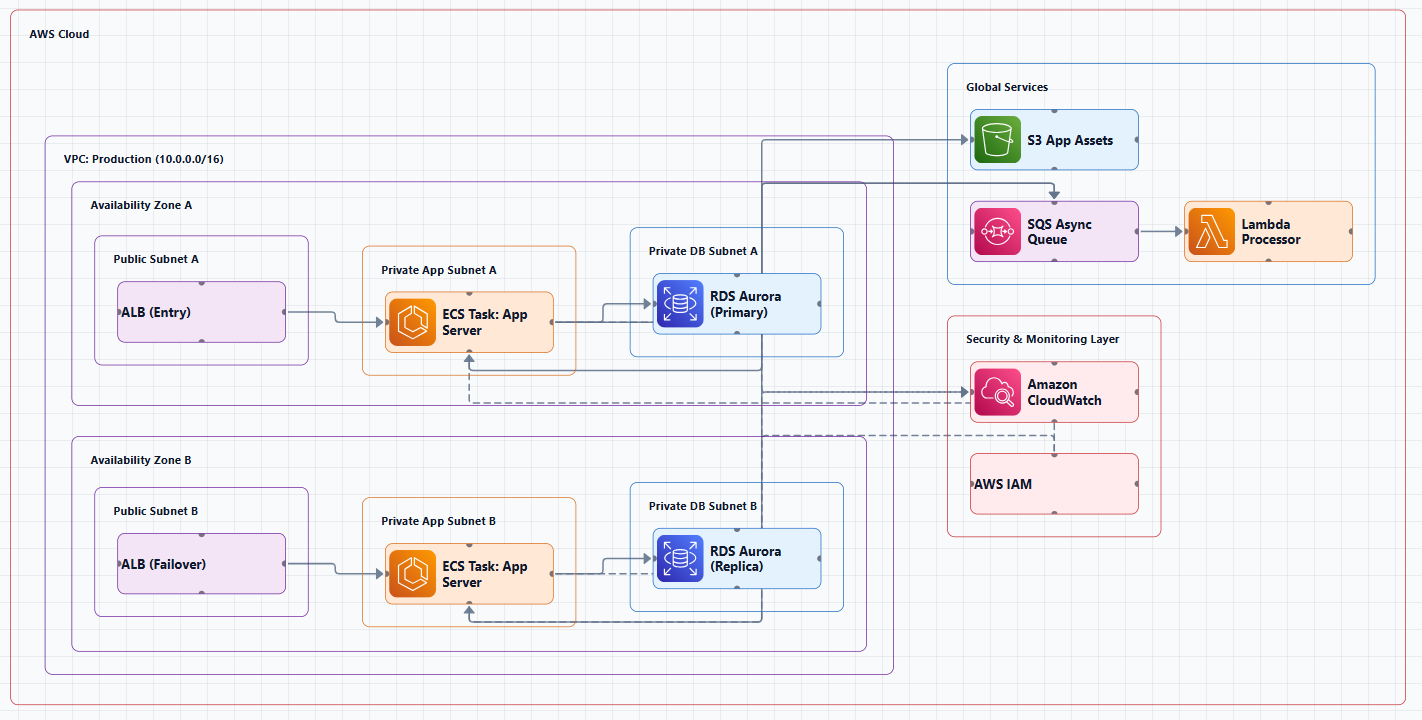
Build a portfolio. Document your architectures. Use the cloud architecture diagram tool to create production-ready AWS architecture diagrams for your projects. The AI cloud diagram generator can help you quickly generate professional diagrams from descriptions, showing you understand not just how to build, but how to communicate what you've built.
The Bottom Line
Do you need AWS certification to be a cloud architect? No. But in 2026, it's a nearly universal expectation. Treat it as a tool to structure your learning, validate your knowledge, and get past HR filters. But never mistake the certification for the job.
The best architects are the ones who think across patterns, not just products. They design for change, automate truth, and treat simplicity as a weapon. They've recovered from failures, built real systems, and learned from both.
Certification can help you get there faster. But it can't take you all the way.