
How to Learn AWS Architecture Best Practices: A Step-by-Step Roadmap
The best way to learn AWS architecture best practices isn't through a single course or book, but through a structured, multi-faceted approach that combines theory with relentless hands-on practice. The path is clear: start with the AWS Well-Architected Framework, dive into official resources, and then build, break, and document your own architectures.
Here is a step-by-step roadmap to guide your learning.
Cloud Architecture
Create cloud architecture diagrams for AWS, Azure, GCP, and more. Design scalable infrastructure with professional cloud icons.
Learn AWS architecture best practices through the Well-Architected Framework, official AWS resources, hands-on projects, diagramming, books and courses, community engagement, and common pitfalls to avoid.
Click Cloud Architecture to open AI Line Studio and generate diagrams from natural language in seconds.
1. Start with the Well-Architected Framework
The AWS Well-Architected Framework is the single most important document for any aspiring cloud architect. It's not just a set of rules; it's a methodology that codifies over a decade of best practices derived from thousands of production workloads. It provides a consistent way to evaluate architectures against best practices and identify areas for improvement.
- Operational Excellence: Run and monitor systems to deliver business value.
- Security: Protect information, systems, and assets.
- Reliability: Prevent and quickly recover from failures.
- Performance Efficiency: Use computing resources efficiently.
- Cost Optimization: Avoid unnecessary costs.
- Sustainability: Minimize the environmental impact of cloud workloads.
The Framework is structured around six pillars, each representing a critical area of architectural design:
How to Use This: The Framework is your decision-making compass. For any design choice, ask yourself: "How does this impact each pillar?". A design that's technically perfect but violates security or cost principles is a failure.
2. Master the Official AWS Resources
AWS provides a wealth of free, high-quality learning materials. Start here to build your foundational knowledge.
- AWS Well-Architected Whitepaper: This is the foundational document that describes the key concepts, design principles, and best practices.
- AWS Skill Builder: This platform offers hundreds of free courses, including pillar-specific training on the Well-Architected Framework. Look for the "AWS Well-Architected for Enterprises" free digital course.
- AWS Architecture Center: Your go-to place for reference architecture diagrams, vetted solutions, and best practices.
- AWS Prescriptive Guidance: Provides strategies, guides, and patterns to aid the design process.
- AWS Well-Architected Tool: A free service in the AWS Management Console that lets you review your workloads against the Framework's best practices.
3. Learn by Building (Hands-On Projects)
Reading about architecture is not the same as doing it. The 70-20-10 rule applies here: 70% of learning comes from hands-on experience.
- Start with AWS Samples: The
aws-samplesGitHub organization has projects designed to teach you best practices, such as deploying a portable application on Lambda, ECS, and EKS. - Follow Project Repositories: Collections like
AWS-Projectsprovide step-by-step guides for real-world scenarios, from beginner to advanced. - Build Portfolio-Grade Architectures: Challenge yourself to create a production-grade, secure infrastructure using Infrastructure as Code (e.g., Terraform). Projects like a highly available, scalable web application using ALB, Auto Scaling, and CloudWatch are excellent for this.
- Explore Proof of Concepts (POCs): Repositories like
aws-proof-of-conceptscontain exercises for different architectural patterns, such as demonstrating reliability best practices across multiple Availability Zones.
4. Study and Create Architecture Diagrams
Diagrams are the universal language of architecture. Learning to create clear, effective diagrams is a core skill.
- Study Reference Architectures: Analyze the diagrams in the AWS Architecture Center. Understand why components are placed where they are and how data flows.
- Document Your Projects: For every project you build, create an architecture diagram. This reinforces your learning and builds your portfolio.
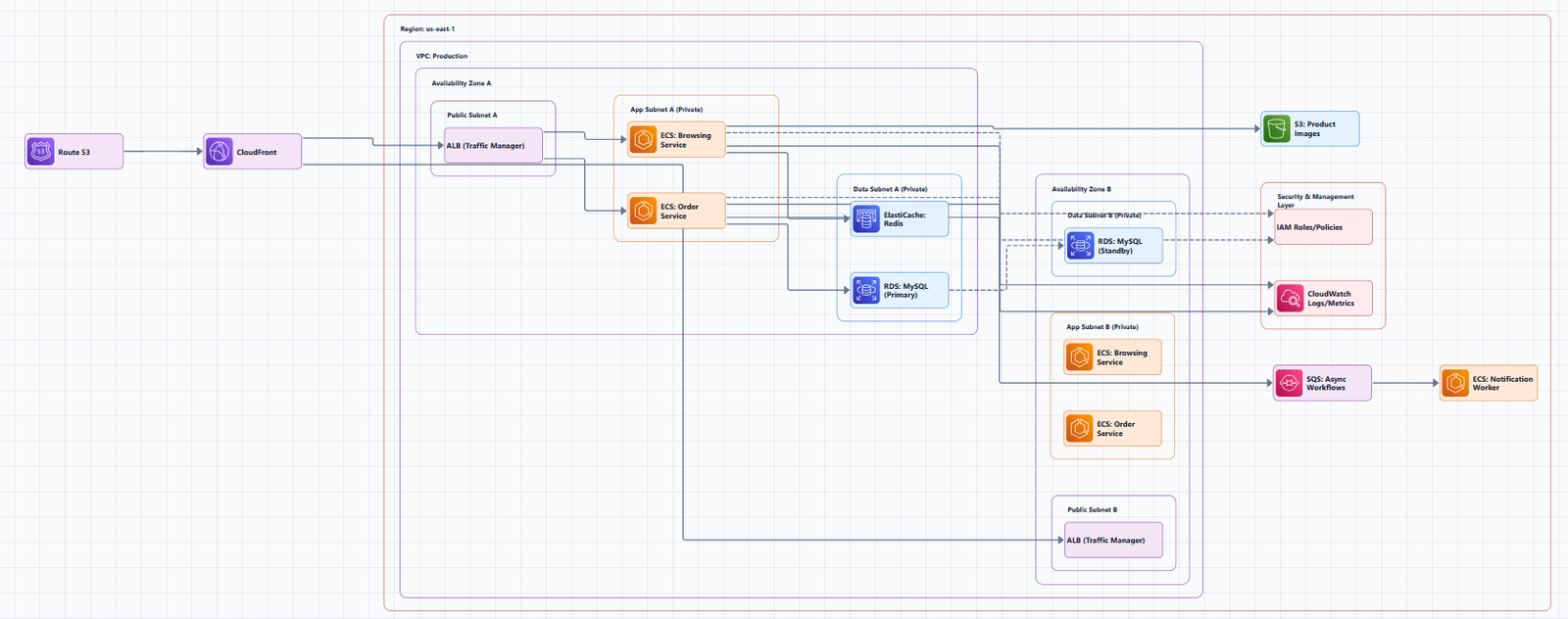
- Use the Right Tools: Leverage modern tools to accelerate this process. AI Line Studio can turn a plain-language description into a production-ready diagram in 15 to 20 seconds, using official AWS icons.
- The AI cloud diagram generator is perfect for rapid iteration during the design phase.
- The AI architecture diagram builder allows for collaboration and refinement.
- The AI system architecture generator helps create end-to-end diagrams for complex systems.
- The cloud architecture diagram tool provides editable templates to get you started quickly.
5. Augment with Books and Courses
While official resources are free and excellent, books and structured courses can provide a different perspective and deeper dives.
- Books: "AWS for Solutions Architects" (Third Edition) is a highly recommended practical guide featuring real-world patterns, GenAI strategies, and certification-aligned best practices. "System Design on AWS" is another great resource for learning best practices for building large-scale systems.
- Courses: Look for instructor-led training like "Advanced AWS Well-Architected Best Practices" for a deep dive into performing effective Framework reviews. Courses like "Architecting on AWS" emphasize AWS cloud best practices and recommended design patterns.
6. Engage with the Community and Stay Current
Learning doesn't happen in a vacuum.
- Follow GitHub Repositories: Many open-source repositories are dedicated to AWS architecture best practices.
- Read Industry Blogs: Follow the AWS Training and Certification Blog and other expert sources for the latest insights.
- Stay Updated: The cloud evolves fast. Make a habit of reading about new services and features. A core best practice is to "continually learn about and discover available services and configurations".
The Cloud Architect's Toolkit
To put this into practice, you'll need a set of core tools:
- Cloud Platform: Deep, hands-on experience with AWS is non-negotiable.
- Infrastructure as Code (IaC): Master tools like Terraform or AWS CloudFormation.
- Diagramming: Use tools like AI Line Studio and draw.io to communicate your designs.
- The Well-Architected Tool: Use it regularly to review and improve your workloads.
Common Pitfalls to Avoid
- Passive Learning: Watching videos and reading docs is not enough. You must build.
- Ignoring the Framework: Certifications teach you services; the Framework teaches you how to design with them.
- Not Documenting: If you can't diagram and explain your architecture, you haven't fully understood it.
Final Thoughts
The journey to mastering AWS architecture is a continuous cycle of learning, building, and reviewing. Start with the Well-Architected Framework, use the official AWS resources as your foundation, and relentlessly apply what you learn through hands-on projects. Document your work with clear architecture diagrams, and engage with the community to stay sharp. The best architects never stop learning, because the cloud never stops evolving.